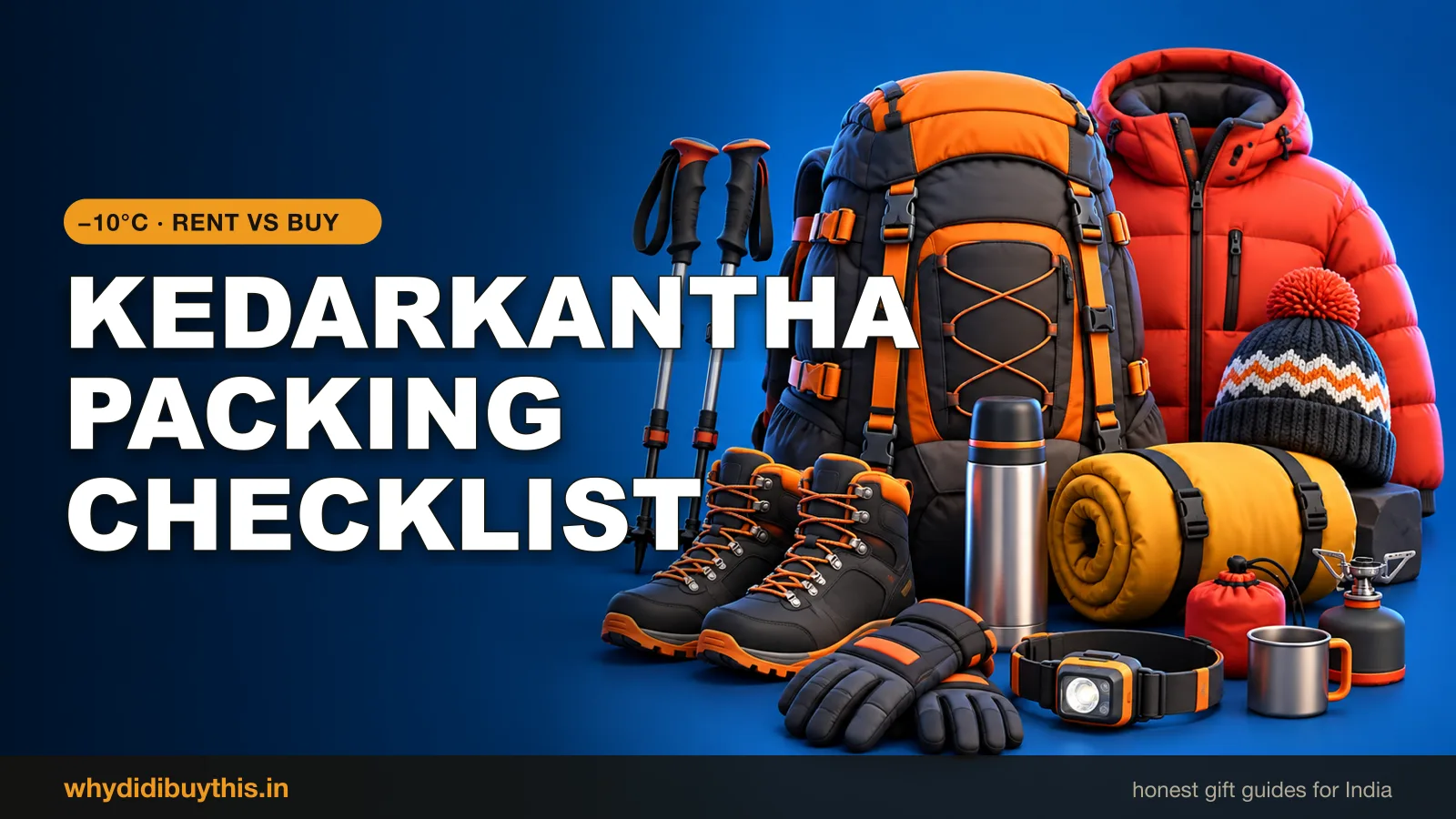
Kedarkantha · Uttarakhand
Kedarkantha is the trek everyone recommends to first-timers, and for once, everyone is right. Six days, a proper snow summit at 12,500 ft, and a trail gentle enough that your gym membership status is nobody's business. But here's what the reels skip: this trek doesn't punish bad fitness half as much as it punishes bad packing. You can huff your way up a slope. You cannot huff your way into feeling your toes at −10°C. Hence this guide — what to rent, what to buy, and what earns a place in a bag you personally carry uphill.
The 6 days you're packing for
Quick map of the week, because every item on this list exists for a specific moment below:
- DAY1
Dehradun → Sankri
A 10-hour drive through Mussoorie into the Tons valley. Today you need snacks and a neck pillow, not trekking gear.
- DAY2
Sankri → Juda ka Talab
4 km of easy forest climbing to a frozen lake at 9,100 ft. Your thermals clock in the minute the sun dips.
- DAY3
Juda ka Talab → Kedarkantha base
Short day, enormous views. You camp at 11,250 ft, where the water bottle next to your pillow freezes overnight. Really.
- DAY4
Summit day
3 am start, headlamp on, −10°C in the wind. Summit by sunrise, then a long descent to Hargaon. Every layer you own is on your body.
- DAY5
Hargaon → Sankri
All downhill through pine forest. Your knees file a complaint; the trekking pole justifies itself retroactively.
- DAY6
Sankri → Dehradun
The drive home, smelling of victory and six-day-old socks. Both earned.
Rent or buy? The honest split
Sankri's rental shops will happily kit you out, and for the pricey one-time items they are genuinely the smart move. The rule of thumb: rent what's bulky and expensive, buy what touches your skin.
Rent in Sankri (₹100–350/day)
- Padded winter jacket — the ₹6,000 kind rents for about ₹150 a day
- Trekking pole — you need it exactly five days a year
- Gaiters and microspikes — summit-day specials, useless back in the plains
- Snow boots, if your shoe budget is tight this month
Buy and keep
- Thermal base layers — rented thermals are a crime against skin
- Woollen socks, three pairs minimum — always, always your own
- Gloves, cap and neck warmer — small, cheap, yours forever
- SPF 50 sunscreen and lip balm — snow bounces sunlight straight up your nose
The packing checklist
Tick things off as they go into the rucksack — the WDIBT app remembers your ticks. Linked items are our approved picks, honest caveats below.
Kedarkantha kit — tick as you pack
0/15 tickedFive things worth buying before Sankri
Each passed the same 25-point test as everything else on WDIBT — fine print included. None of them need a plug point, which matters more than you'd think at 11,000 ft.
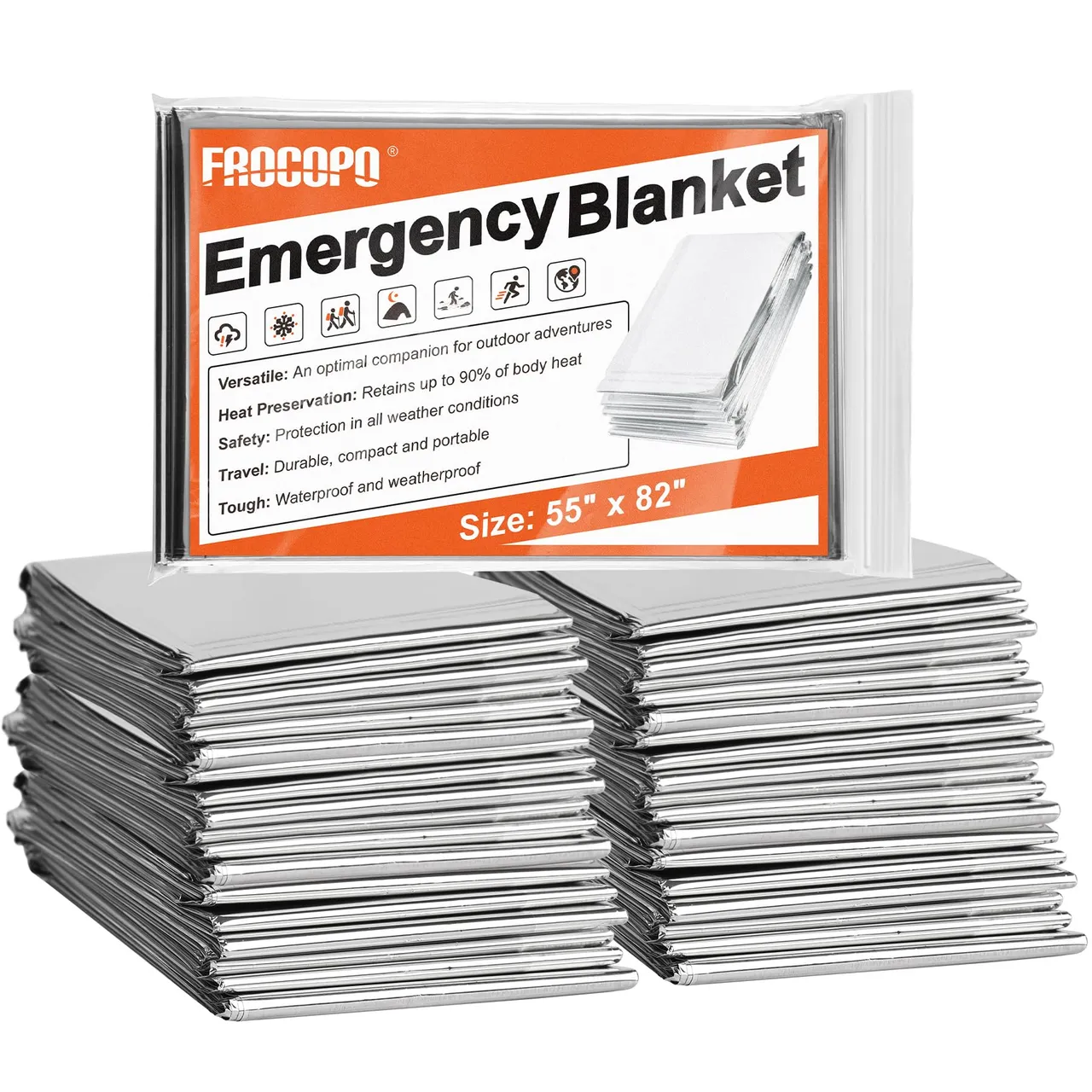
Space Blanket Six-Pack
NASA shine, Himalayan nights.
₹539 ↓ was ₹1,499on Amazon.in · checked 4 Oct
checked 4 Oct
We may earn a commission when you buy through links on this page — at no extra cost to you.
Six mylar sheets, each folding to credit-card size — hand one to every friend in the group. Line the rented sleeping bag with one at base camp, and the other five live in lid pockets as the emergency layer you hopefully never unfold. One honest note — it crinkles like a packet of chips, so your tent-mate will hear every turn.

Fleece Hot Water Bottle
The cosiest ₹300 you can wrap in December.
₹268 on Amazon.in · checked 3 Oct
checked 3 Oct
We may earn a commission when you buy through links on this page — at no extra cost to you.
The oldest Himalayan trick there is: fill it from the kitchen tent's warm-water round after dinner, and it heats the foot of the sleeping bag through the night the water bottle beside your pillow freezes. Two litres, fleece cover, zero electricity. The catch: warm water only, never boiling — rubber and a scald at 11,250 ft are both bad ideas.
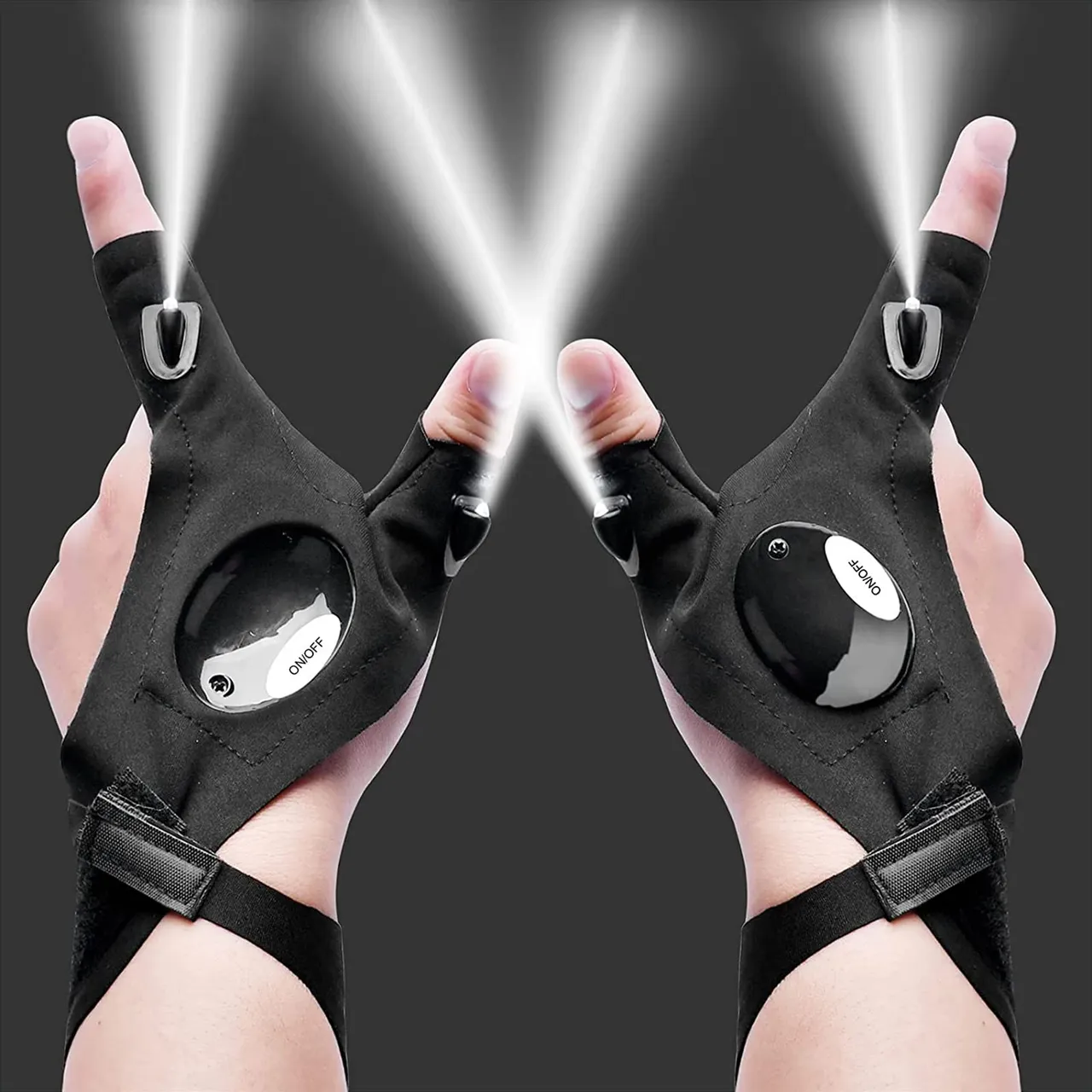
Finger Flashlight Gloves
Torchlight that follows your hands.
₹389 ↓ was ₹999on Amazon.in · checked 4 Oct
checked 4 Oct
We may earn a commission when you buy through links on this page — at no extra cost to you.
LED beams on the thumb and index finger, pointing wherever your hands are fumbling — the tent zip at 3 am, the boot laces, the thermos lid. Be clear about what these are: thin liner gloves for camp chores, worn under your proper woollen pair, not a replacement for it. And as with anything battery-powered, cold drains them faster, so carry the spare cells.
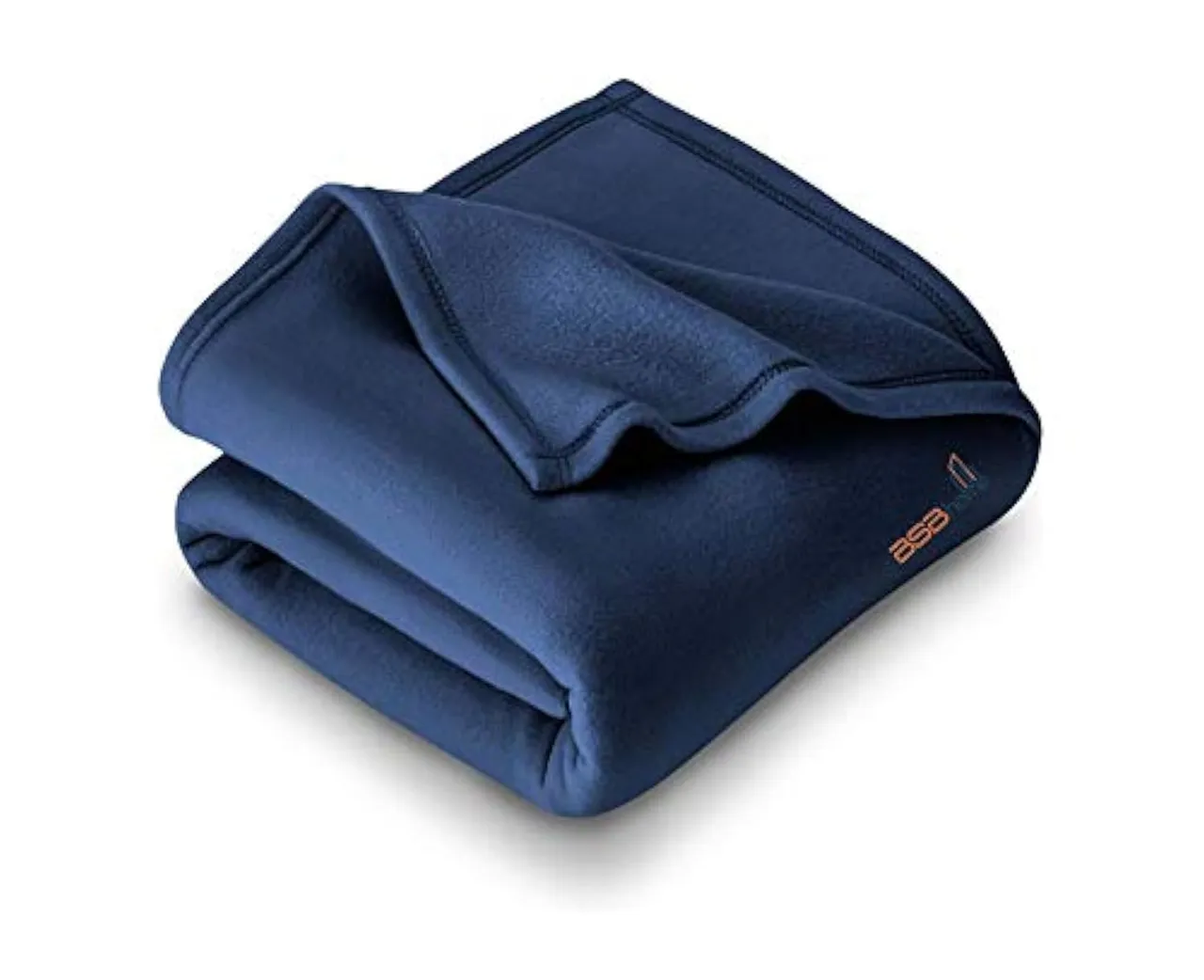
300 GSM Fleece Blanket
Heavy-winter fleece for less than a pizza.
₹415 ↓ was ₹999on Amazon.in · checked 4 Oct
checked 4 Oct
We may earn a commission when you buy through links on this page — at no extra cost to you.
Rented sleeping bags are rated by optimists. A 300 GSM fleece single, folded lengthwise and used as a liner, adds the layer the bag is missing and doubles as the blanket on the Sankri guesthouse night. Fair warning: it's a layer, not a razai — the bag still does the heavy lifting — and at 152 × 220 cm it eats real rucksack space, so it goes in first, at the bottom.

Pop-Up Privacy Tent
The most missed room on a trek.
₹1,599 ↓ was ₹2,499on Amazon.in · checked 4 Oct
checked 4 Oct
We may earn a commission when you buy through links on this page — at no extra cost to you.
Springs open into a full-height cabin for the toilet stop, the change of thermals or the wet-wipe bath on an open hillside. Ask your operator before buying, though — every reputable one carries a toilet tent, and this one is a pooled group purchase at best, not a solo carry. Folding it back into its disc takes two attempts the first time. Everyone's does.
How the layers actually work
Nobody has ever stood on a Himalayan summit thinking 'I wish I'd packed fewer warm things.'
Good questions
When is the best time to do Kedarkantha?+
December to April for snow — January is peak postcard season. Want the summit without the −10°C drama? September to November gives you clear skies, autumn colours and merely cold-ish nights.
How fit do I need to be?+
If you can jog 4–5 km, or climb stairs for 20 minutes without negotiating with god, you're fine. Start brisk walks three to four weeks out. Altitude is the real boss fight, not distance — walk slow, drink more water than feels reasonable, and tell your guide if a headache won't quit.
What's a realistic budget?+
₹8,000–12,000 for the trek package (Sankri to Sankri), ₹2,000–3,500 for Dehradun transport, and ₹2,000–4,000 on gear if you rent the big-ticket items. Under ₹20k all-in, as long as you don't shop like it's Everest.